
Main Content
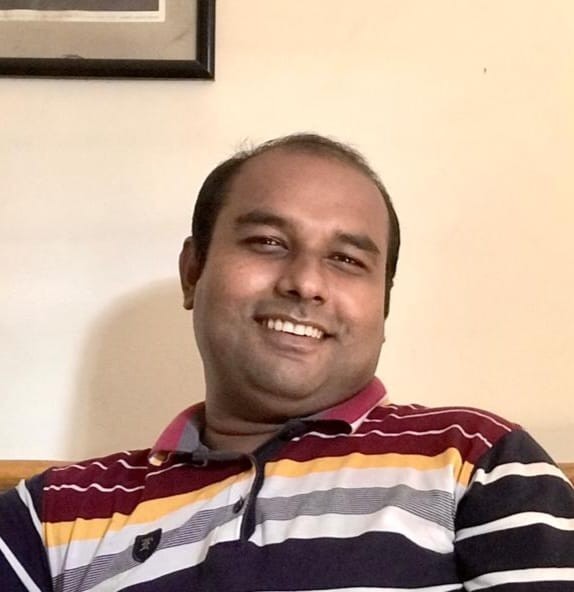
Md. Shakir Ahammed
Lecturer
B. Sc. in Environmental Science and Resource Management (Hons.) (MBSTU), M. S in Environmental Science (BAU)
+8801734751790


Biography
Md. Shakir Ahammed is an environmental scientist whose work is focused on addressing environmental challenges and promoting sustainable solutions. He is currently employed as a Lecturer and Acting Chairman in the Department of Environmental Science, Faculty of Agriculture, at Habiganj Agricultural University. An M.S. degree in Environmental Science was earned by him from Bangladesh Agricultural University,where he achieved the highest CGPA in his cohort. Additionally, a B.Sc. in Environmental Science and Resource Management was completed by him at Mawlana Bhashani Science and Technology University. Research contributions have been made by Mr. Ahammed in areas such as phycoremediation using microalgae, environmental impact assessments (EIAs) of infrastructure projects, and monitoring of water quality and ecosystem health. Studies on microplastic pollution, soil quality near industrial zones, and climate-adaptive farming systems have also been undertaken by him.Prior to his academic role, professional experience was gained by him as a Research Assistant in phytoremediation projects. Several publications authored by him include research on heavy metal detoxification, water quality assessments, and climate change mitigation strategies.An NST Fellowship was awarded to him for his academic excellence. Proficiency has also been demonstrated by him in GIS, SPSS, and other analytical tools, showcasing his commitment to environmental science and sustainable development.
Research Profile
Research Articles
- Ahammed, M. S., Baten, M. A., Ali, M. A., Mahmud, S., Islam, M. S., Thapa, B. S., ... & Tusher,T. R. (2023). Comparative Evaluation of Chlorella vulgaris and Anabaena variabilis for Phycoremediation of Polluted River Water: Spotlighting Heavy Metals Detoxification. Biology, 12(5), 675.
- Ahammed, M. S., Murtuza, H. I., Rahman, A. A., Islam, M. S., & Saiem, R. (2020). Assessment of Water Quality Parameters of The Kohelia River at Cox’s Bazar of Bangladesh. Journal of Environmental Science and Natural Resources, 13(1-2), 76-81.
- Islam, M. S., Shapla Khatun, M. H. K., Meghla, N. T., Ahammed, M. S., Hoq, M. E., & Iqubal,K. F. (2022). Monitoring of Water Quality with Trophic State Index (TSI) in the Chalan Beel Wetland Ecosystem of Bangladesh.
- Islam, M. S., Ahammed, M. S., Basher, F., Kabir, M. H., Hasan, T. and Sarker, M. E. (2020). Environmental Impact Assessment of Nagarpur Bridge Construction over the Dhaleshari River at Tangail of Bangladesh. SPC Journal of Environmental Sciences, 2(1): 19-25. (https://www.sciencepubco.com/index.php/JES/article/view/30550).
- Moni, F. N., Miazi, M. S. A., Kabir, M. H., Shammi, R. S., Islam, M. S., Islam, M. S., Sarker, M. E., Khan, M. M., Ahammed, M.S., ... & Kormoker, T. (2024). Enrichment, sources, and distributions of toxic elements in the farming land's topsoil near a heavily industrialized area of central Bangladesh, and associated risks assessment. Heliyon, 9(4).
- Islam, M. S., Sultana, S., Sarker, R., Kabir, M. H., & Ahammed, M. S. (2020). Environmental impact assessment: implications of bridge construction venture in Bangladesh. Journal of Environmental Science and Natural Resources, 13(1-2), 13-18.
- Ali, M. A., Haque, S. M., Sohrawardi, K., Rabbi, S. F., Sarkar, S. K., Hiya, H. J., ... & Ahammed,M. S. (2023). Integrated Rice-Based Shrimp and Crabs Farming: Adaptation to Climate Change and Potential Mitigation of Global Warming in the Coastal Wetlands of Bangladesh. Journal of Agricultural Chemistry and Environment, 12(3), 223-237.
- Moni, F. N., Miazi, M. S. A., Kabir, M. H., Shammi, R. S., Islam, M. S., Islam, M. S., Sarker, M. E., Khan, M. M., Ahammed, M.S., ... & Kormoker, T. (2024). Corrigendum to “Enrichment, sources, and distributions of toxic elements in the farming land's topsoil near a heavily industrialized area of central Bangladesh, and associated risks assessment” [Heliyon 9 (4) 2023 e15078]. Heliyon, 10(2).
- Islam, M. S., Shapla Khatun, M. H. K., Meghla, N. T., Ahammed, M. S., Hoq, M. E., & Iqubal,K. F. (2022). Monitoring of Water Quality with Trophic State Index (TSI) in the Chalan Beel Wetland Ecosystem of Bangladesh.
- Latif, M. B., Khalifa, M. A. K., Hoque, M. M. M., Ahammed, M. S., Islam, A., Kabir, M. H., & Tusher, T. R. (2022). Appraisal of surface water quality in vicinity of industrial areas and associated ecological and human health risks: A study on the Bangshi river in Bangladesh. Toxin Reviews, 41(4), 1148-1162.
- Ali, M. R., Faruque, M. O., Islam, M. T., Molla, M. T., Ahammed, M. S., Mahmud, S., & Mohiuddin, A. K. M. (2021). Appraisal of Heavy Metal Presence and Water Quality having Microbial Load and Associated Human Health Risk: A study on tube-well water in Nalitabari township of Sherpur district, Bangladesh.
Conference Proceedings
- 3rd international conference on advancement of life sciences 2025
Posters
- Md. Shakir Ahammed*, Md. Samrat Hossain, Md Hanif Mia, H. M. Rayhanul Islam, Fatima Khatun. Heavy Metal Distribution and Their Uptake by Rice Near Open Dumpsite Area in Mymensingh. 3rd International Conference on Advancement Life Science 2025.
Projects
- phytoremediation and phylloremediation Approaches: Exploring the potential of plants for the remediation of air pollutants.
- Status: Completed
- Duration: Jul 2021-Dec 2022
- Funding Agency: Ministry of Education
- Role: Research Assistant
2. Comparative Evaluation of Chlorella vulgaris and Anabaena variabilis for Phycoremediation of Polluted River Water: Spotlighting Heavy Metals Detoxification
- Status: Completed
- Duration: Jul 2020 - Jun 2021
- Funding Agency: Ministry of Science and Technology (MoST)
- Role: Research fellow
Research Philosophy
My research philosophy centers on generating rigorous, interdisciplinary, and solution-oriented
knowledge to address contemporary environmental challenges, particularly in developing agro-
ecological contexts. I emphasize field-based assessment, laboratory analysis, and quantitative
evaluation to investigate environmental pollution, ecological risk, and human health impacts. My
work prioritizes nature-based solutions such as phytoremediation and phycoremediation for
sustainable management of water, soil, and agricultural ecosystems. I believe research should
inform policy, support environmental sustainability, and contribute meaningfully to climate-
resilient development while maintaining strong ethical and scientific standards.
Teaching Philosophy
I believe teaching should be clear, practical, and student-friendly. My goal is to help students
understand basic concepts and apply them to real environmental problems. My teaching
philosophy is to make learning relevant to the local environment of haor areas and nearby
industries. I use real examples from rivers, wetlands, agriculture, and industrial activities in
Habiganj to explain environmental concepts. I encourage students to observe nature, ask
questions, and think critically about local environmental problems. I believe practical learning,
field visits, and simple explanations help students learn better. Through teaching, I aim to
develop skilled, responsible graduates who can contribute to sustainable development and
environmental protection in haor regions.